I’m offering a 2-month introductory rate for new clients who sign up for ongoing accounting services.
If you’re looking for reliable bookkeeping and financial support, now is a great time to get started!
Message me or book a consult to learn more.

I’m offering a 2-month introductory rate for new clients who sign up for ongoing accounting services.
If you’re looking for reliable bookkeeping and financial support, now is a great time to get started!
Message me or book a consult to learn more.
Managing the compliance of your LLC can be a constant struggle, particularly when it comes to meeting annual report obligations. Errors in this area not only lead to financial penalties but can also damage your company’s credibility. However, hidden within the deadlines and forms are valuable insights that go beyond mere regulatory adherence. Successfully handling these requirements can provide clarity on your company’s financial health and overall direction. Grasping the specific details of these reports is vital for steering your business toward better opportunities.
When your LLC undergoes structural changes, such as mergers or moving to a new state, it’s vital to grasp how these shifts affect your filing deadlines. For example, transitioning from a sole proprietorship to a multi-member LLC can change when forms like Form 1065 are due. Plus, with new beneficial ownership reporting requirements starting January 1, 2024, it’s crucial to adjust your timelines. Relocating your LLC across state lines also means adapting to new state-specific deadlines, which can vary widely. Staying informed about these changes helps you avoid penalties and ensures compliance.
Filing your LLC’s annual report can vary significantly from state to state, with different submission methods and fees. Many states are moving towards mandatory online submissions to streamline the process and cut down on paperwork. For instance, filing online in some states can save you money compared to using paper forms. Understanding these state-specific requirements ensures timely compliance and helps you avoid fees.
Failing to update your LLC’s ownership or management changes in your annual report can have serious consequences. The Corporate Transparency Act, effective January 1, 2024, requires U.S. businesses to report beneficial ownership information to prevent illicit activities. Non-compliance can lead to hefty fines and even imprisonment. As you gear up for the 2024 reporting season, it’s crucial to understand these responsibilities, especially with new cybersecurity and board diversity disclosure rules from the SEC and other regulatory bodies. Keeping your management and ownership details up-to-date is not only a legal obligation but also vital for maintaining your company’s integrity.
An LLC's annual reports offer valuable insights for refining financial strategies. The data reveals trends and potential growth areas, providing a clear view of where the business is heading. Analyzing this information allows for better decision-making and aligning efforts with achievable goals. It also helps ensure that resources are used to support business health. Sharing these findings strengthens internal alignment and drives momentum.
Significant managerial changes can dramatically influence your LLC’s strategic direction, as reflected in annual reports. Research shows that shifts in management, such as appointing new executives or board members, often lead to strategic and structural adjustments. These changes highlight the need for continuous adaptation within your organization. Documenting these strategic shifts in your annual reports keeps stakeholders informed and ensures your company remains forward-thinking.
Missing the deadline for filing your LLC’s annual report can have serious financial repercussions. Some states impose stiff penalties for late filings, which can be particularly burdensome for smaller businesses. Beyond fines, your company risks being marked as “inactive,” damaging your reputation and operations. Habitual late filing may even lead to administrative dissolution, stripping your business of its legal standing.
Keeping up with state-required annual reports and amendment filings can be overwhelming, but all-in-one business platforms can simplify the process. For example, a trusted platform like ZenBusiness can automate submissions, ensuring accuracy and timeliness, and offer customization to meet varying state requirements. By using such tools, you reduce the risk of late fees and penalties, allowing you to focus on growing your business without the stress of compliance hassles.
Ultimately, mastering the art of LLC annual report compliance is not merely an administrative necessity; it is a strategic endeavor that fortifies the backbone of your business. Each form filed is a step towards safeguarding your company’s integrity, a push towards operational efficiency, and a nod to the foresight that distinguishes successful enterprises. By embracing best practices and leveraging innovative tools, you transform compliance from a looming obligation into a powerful ally. As you navigate the complexities of state regulations and reporting standards, remember that your diligence today lays the foundation for resilience and success tomorrow.
Elevate your business potential by joining the Broomfield Chamber of Commerce and unlock exclusive resources and networking opportunities tailored for your success!
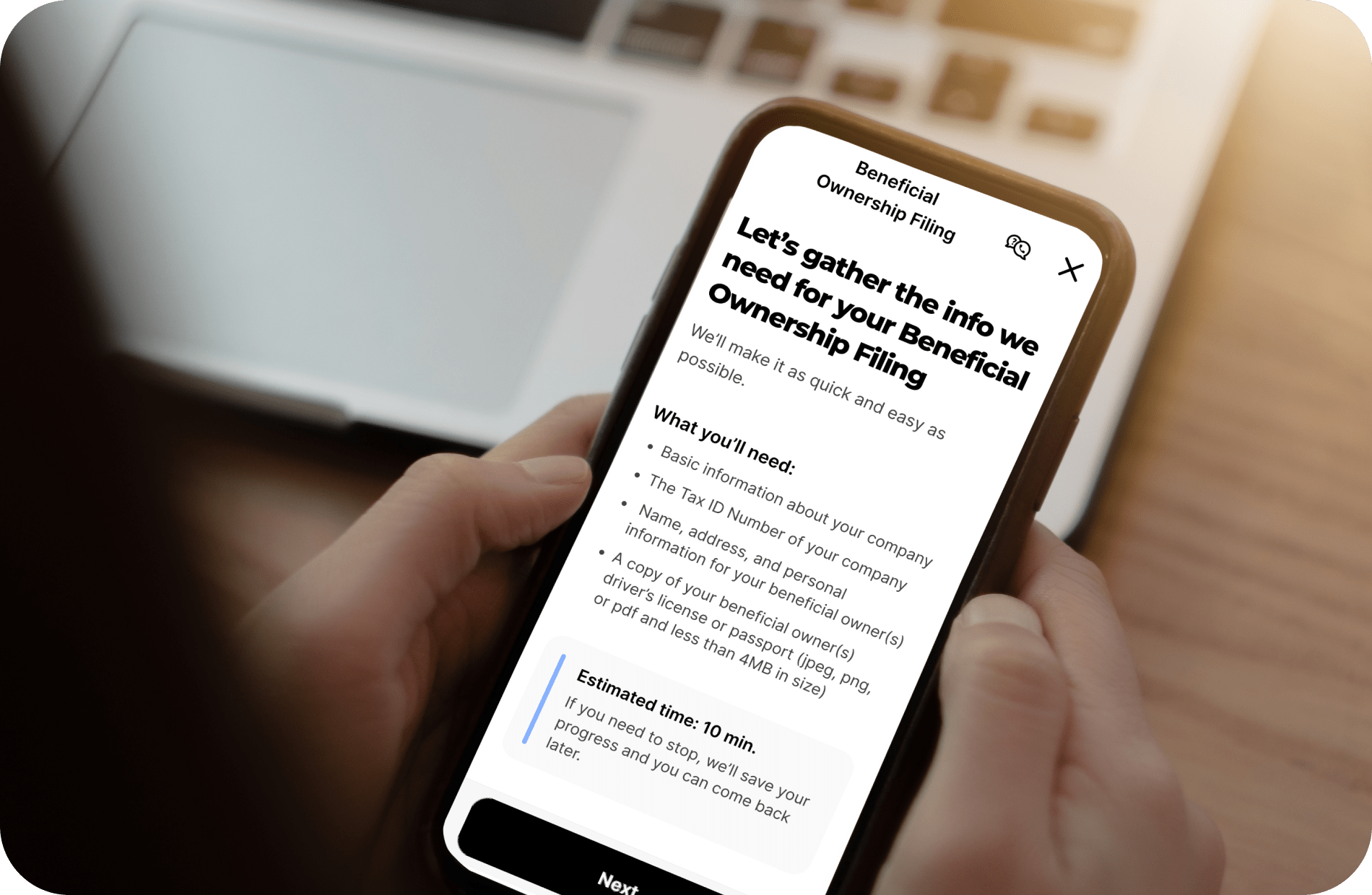
The Corporate Transparency Act (CTA) mandates that businesses in Broomfield, CO, report Beneficial Ownership Information (BOI) to FinCEN to enhance transparency and combat financial crimes.
While a Texas federal district court’s preliminary injunction puts this requirement on hold, many experts expect that to be overturned. In that event, failure to file could lead to fines of $500 per day, up to a maximum of $10,000, and possible criminal penalties.
Businesses required to file include most LLCs, corporations, and similar entities, with exemptions for banks, publicly traded companies, and nonprofits.
Beneficial owners include individuals who:
Own 25% or more of the company, or
Have substantial control over business operations.
Gather details for both the company and its beneficial owners, including:
Company: Name, EIN, address.
Owners: Names, birthdates, residential addresses, and ID information.
Deadlines:
Existing businesses: File by January 1, 2025.
New businesses formed in 2024: File within 90 days of creation.
New businesses formed in 2025 or later: File within 30 days of creation.
Learn how ZenBusiness can assist with a simple, stress-free filing process here.
Most small businesses, such as a Broomfield-based consulting firm or café, fall under the reporting requirements. Exempt entities include nonprofits, large publicly traded companies, and certain financial institutions.
A beneficial owner is anyone who:
Owns 25% or more of the business, or
Exercises substantial control over operations.
Example: In a Broomfield bakery with three equal partners, each partner would be classified as a beneficial owner due to shared decision-making authority.
Businesses must provide:
Business Information: Name, EIN, physical address.
Owner Information: Full names, birthdates, residential addresses, and ID details.
BOI reports are submitted electronically via FinCEN’s online system. Deadlines depend on the business's formation date:
Companies formed before January 1, 2024 must file by January 1, 2025.
Companies formed in 2024 must file within 90 days of formation.
Companies formed after January 1, 2025 must file within 30 days of creation.
Failing to file or providing false information can result in:
Daily fines of $500, capped at $10,000.
Imprisonment for serious violations.
However, FinCEN offers a 90-day safe harbor period to correct filing errors without penalties.
While a Texas federal district court’s preliminary injunction puts this requirement on hold, many experts expect that to be overturned. In that event, failure to file could lead to fines of $500 per day, up to a maximum of $10,000, and possible criminal penalties.
Waiting could mean scrambling to meet compliance requirements or penalties. Business owners can avoid hassles and legal repercussions by filing now with the quick and accurate assistance of ZenBusiness.
*As of December 3, 2024, a Texas federal district court has issued a preliminary injunction for all states to block the CTA and its relevant regulations. However, filing your BOI will help you avoid fines if this injunction is overruled.
Growth is exciting, but it brings challenges that look very different at each stage of a company’s journey. Whether you’re a solo entrepreneur gaining traction, a local shop scaling operations, or a growing team navigating complexity, managing growth requires adaptable strategies.
Below, we’ll explore stage-specific approaches, highlight key tactics, and share practical resources that can help you make smart moves as your business expands.
In the first stage, most owners focus on:
Building reliable revenue streams
Establishing brand identity
Clarifying customer acquisition channels
Practical steps include setting up business banking with providers like Bluevine for smooth cash flow, and using marketing tools such as Mailchimp to run professional campaigns without big overhead.
Checklist for this stage:
Separate business and personal finances.
Define 1–2 core customer acquisition channels.
Document your core processes (sales, invoicing, fulfillment).
As revenue stabilizes, complexity increases. Owners often realize their systems can’t keep up. This is the time to:
Invest in cloud accounting platforms (e.g., Xero) for financial visibility.
Create standard operating procedures to reduce errors.
Formalize reporting and KPIs to track progress.
At this stage, chambers of commerce often provide helpful workshops and peer connections that clarify local compliance and marketing opportunities.
Growth usually means more people. Adding staff or bringing on contractors requires planning and compliance. For example, when you hire contractors, you’ll need a W9 form from the IRS to gather details like their TIN, SSN, or EIN. This ensures you can file accurate 1099s at year-end. If you’re new to the process, check this out for a detailed guide.
Quick hiring tips:
Clarify roles before recruiting.
Decide early between employees and contractors.
Use structured onboarding checklists to reduce turnover.
Established businesses often face the challenge of overreliance on one product, client, or channel. At this stage, growth strategies may include:
Expanding into new geographic markets
Offering complementary services
Building leadership teams to delegate effectively
Short, data-driven insights from Statista or industry-specific benchmarks can help guide where diversification makes the most sense.
|
Growth Stage |
Primary Focus |
Key Risks |
Recommended Tools/Resources |
|
Early Growth |
Revenue & identity |
Cash flow issues, weak branding |
Bluevine, Mailchimp |
|
Scaling Operations |
Systems & structure |
Inefficiency, errors, compliance |
Xero, local chamber workshops |
|
Mature Growth |
Diversification & leadership |
Overreliance, leadership gaps |
Statista, strategic planning tools |
What’s the first system I should put in place?
Start with accounting. A clear financial picture supports every other decision.
How do I know if I need to hire?
If growth is limited because you’re the bottleneck, it’s time to bring in help.
Is diversification always necessary?
Not always. If one product or service is still scaling, focus there until growth plateaus.
How can I reduce risk while scaling?
Document processes and create redundancy so operations don’t depend on one person.
Growth isn’t a straight line. Each stage demands different strategies—from financial discipline and operational systems to team-building and diversification. By approaching each stage with the right tools and resources, small business owners can turn growth into sustainable success.
Discover the vibrant business community of Broomfield by joining the Broomfield Area Chamber of Commerce and unlock exclusive networking opportunities, events, and resources.
Running a beauty salon successfully requires more than just offering exceptional services; it demands strategic financial management to secure long-term growth. By implementing effective financial strategies, you can streamline operations, boost profitability, and enhance your salon’s reputation in the competitive market. Embracing technology for document management, investing wisely in marketing, and maintaining a strong digital presence are key components of this journey.
Creating a document management system for your business can streamline operations, improve organization, and ensure easy access to critical files. By standardizing file formats, such as saving documents as PDFs, you can preserve formatting and enhance compatibility across devices. Additionally, using an online tool that allows you to convert files to PDFs by simply dragging and dropping them into the tool can save time and simplify the process for your team. Centralizing your documents in a well-organized system reduces clutter and enhances collaboration across departments. With these solutions, you'll find that this could be useful in maintaining a more efficient workflow.
Promoting a beauty salon effectively involves focusing on digital advertising and engaging with the local community. Allocating a large portion of the budget to platforms like social media and search engines helps improve visibility and reach a targeted audience. Participating in local events or sponsoring community activities strengthens relationships and builds trust with potential clients. Combining online efforts with community-focused strategies creates a balanced approach to expanding your customer base.
To effectively manage the finances of your beauty salon, implementing a robust accounting system that tracks expenses in real time is crucial. This system not only accelerates financial processes but also ensures data accuracy and smooth day-to-day operations. By integrating accounting software with your existing financial infrastructure, such as payroll and banking systems, you can create a seamless flow of data, reducing manual entry errors and enhancing financial analysis. As your salon grows, the system should be scalable to accommodate new employees or departments.
To enhance the financial success of your beauty salon, it’s crucial to evaluate the profitability of each service you offer. By analyzing financial statements and industry reports, you can identify which services generate the highest profit margins and which ones fall short. This approach allows you to focus on promoting and expanding the most lucrative services while reconsidering or optimizing the less profitable ones. For instance, services that require minimal capital investment but yield high customer retention rates can significantly boost your bottom line.
In the beauty salon industry, minimizing waste is crucial for financial success, and this can be achieved by precisely forecasting product needs and optimizing inventory management. By employing advanced predictive modeling techniques, you can anticipate customer demand more accurately, reducing the risk of overstocking or understocking essential products. This approach not only saves money but also ensures that you have the right products available when clients need them, enhancing customer satisfaction.
Understanding and integrating seasonal trends into your financial forecasts can significantly enhance your business strategy. By analyzing historical sales data, you can identify patterns such as increased demand during holiday seasons or a dip in customer visits during summer months. This foresight allows you to prepare for peak periods by ensuring adequate inventory and staffing, while also planning for slower times by managing expenses and cash flow effectively.
Investing in a robust online presence is crucial for beauty salons aiming to thrive in today’s digital landscape. By creating a professional website and maintaining active social media channels, you can significantly boost your salon’s visibility and attract a broader audience. A well-designed website serves as a virtual storefront, showcasing your services, prices, and customer testimonials, which can help convert visitors into clients.
Cultivating robust relationships with your vendors can significantly enhance your business’s financial health and operational reliability. By fostering a partnership based on mutual trust and shared objectives, you can negotiate more favorable terms, such as volume-based discounts, which directly improve your profit margins. Utilizing technology to monitor supplier performance and maintaining open communication channels ensures that both parties are aligned, reducing the risk of supply chain disruptions.
By embracing these strategic practices, your beauty salon can achieve a competitive edge and sustainable growth. Each step, from efficient document management to strategic marketing and financial forecasting, contributes to building a resilient and prosperous business. With a focus on innovation and adaptability, your salon can thrive in an ever-evolving market landscape.
Discover the vibrant business community of Broomfield by visiting the Broomfield Chamber of Commerce and explore opportunities to grow your business today!Imagine having the power to create mesmerizing, high-quality promotional images at the click of a button, without the need for extensive design expertise or a hefty budget. Thanks to groundbreaking AI technology, this is no longer a distant dream but a tangible reality. Ready to transform your brand’s visual identity and captivate your audience effortlessly? In this guide, we’ll unveil how AI is revolutionizing the creation of promotional images, empowering your business to shine in a crowded market.
AI image-generation tools have come a long way, offering incredible flexibility and creativity in producing high-quality visuals from textual descriptions. These tools use sophisticated algorithms to create realistic and detailed images, whether you’re after photorealistic visuals, artistic illustrations, or customized graphics. While these tools offer immense potential, it’s important to be mindful of data privacy and copyright issues to ensure compliance with legal standards.
One of the most impressive capabilities of AI is its ability to enhance the resolution of your images. Advanced algorithms can upscale images without losing quality, transforming low-quality visuals into sharp, high-definition graphics. This technology is not only cost-effective but also ensures your promotional materials look professional across various formats, from digital displays to large prints. For businesses, this means presenting polished, eye-catching visuals that can captivate your audience.
Leveraging a text-to-image AI tool can significantly enhance your business’s promotional materials. These innovative tools allow you to input a specific text or description to generate AI art, transforming simple words into visually appealing images. Additionally, you have the flexibility to specify the style or medium of your image, ensuring the final output aligns perfectly with your brand’s aesthetic. This capability can be particularly useful for marketers and designers looking to overcome creative blocks and produce high-quality visual content swiftly. Here’s an option if you’re looking to get started.
To create standout promotional images, focus on a few critical elements. Ensure your visuals are appealing and align with your brand’s identity, as they often form the first impression with your audience. Optimize dimensions for various social media platforms to maintain clarity and professionalism. Incorporate custom images and use transparent backgrounds (.PNG) to blend your visuals seamlessly into different contexts. Simplicity in design, with a clear call to action, can enhance user engagement and drive success.
Creating compelling promotional images with AI starts with understanding your target audience and aligning the visuals with their preferences. Consider cultural, social, and demographic factors that resonate with your audience’s values and interests. Successful campaigns often tap into user-suggested prompts to enhance engagement and authenticity. Regularly reviewing and adjusting AI-generated images ensures they remain relevant and free of biases that could alienate your audience.
Leveraging AI-powered graphic design tools can significantly reduce expenses traditionally associated with hiring professional designers. These platforms offer user-friendly interfaces that allow you to create professional-quality visuals without needing advanced design skills. This shift not only saves you the high hourly rates of designers but also accelerates your design process. AI tools help maintain a consistent output, ensuring you stay on brand without the lengthy and costly hiring process.
Harnessing AI algorithms allows you to tailor promotional images that resonate with specific audience demographics, enhancing engagement and conversion rates. These algorithms analyze vast datasets to understand patterns and preferences of different consumer segments, allowing you to create highly personalized and effective visuals. Automated A/B testing facilitated by AI can expedite the process, ensuring that the images used are optimized for performance. Keeping up with emerging AI trends and innovations will enable you to refine your marketing strategies and stay ahead of the competition.
AI-powered image creation offers an unparalleled advantage. By embracing these advanced tools and techniques, your brand can consistently produce compelling and tailored promotional content that not only captures attention but also drives engagement and conversions. As you venture forward, let AI be the catalyst that propels your visual storytelling to remarkable heights, ensuring your brand remains vibrant, relevant, and unforgettable in the minds of your audience.
Elevate your business with the Broomfield Chamber of Commerce, which can be your gateway to valuable resources and essential connections in our vibrant community!In every town, there’s still a stack of flyers on a counter, a brochure rack near the entrance, and a box of postcards left over from a seasonal campaign. For many local businesses, these materials represent hours of work and a sizable budget—but most are seen once and forgotten.
The good news? These same materials can be reborn online as engaging, searchable, and shareable content that amplifies your reach far beyond your neighborhood.
Repurposing print materials saves time and money while boosting brand visibility.
Tools like online OCR scanners make it easy to digitize text for reuse.
Visuals from brochures and flyers can become social media posts or website graphics.
Structuring your content for digital readability—lists, checklists, short paragraphs—keeps engagement high.
Consistent {brand, intent} cues across platforms improve online recognition and search performance.
Many local businesses underestimate the hidden value sitting in their print archives. A brochure’s “About Us” section can transform into an SEO-friendly homepage introduction. A flyer’s event listing can become a blog update or Google Business post.
The goal isn’t to start from scratch, but to extract, refine, and reformat what’s already working in your physical marketing.
Before you begin, gather your best-performing materials—the ones customers have commented on or responded to. These will likely translate best into digital form.
If you’ve got a folder full of printed materials, you don’t need to retype every word. Try scanning them and using an optical character recognition (OCR) tool to turn the images into editable text. For fast results, this one’s worth considering: an online OCR tool. It lets you extract the original text, so you can easily update copy for social media, newsletters, or your website. From there, refresh language to fit your current brand tone and optimize headlines for search visibility.
A well-designed print ad is a visual storytelling tool. That same energy should carry over to your digital presence. Reuse imagery from your flyers or brochures to create:
Instagram carousels that highlight your products or services.
Pinterest graphics featuring before-and-after visuals or service tips.
Banner images for blog posts or email newsletters.
Google Business profile photos that reinforce brand familiarity.
Keep the file sizes optimized for fast loading, and always use alt text that includes your brand name and location for accessibility and search benefits.
Here are proven methods for transforming print assets into online-ready marketing pieces:
Convert testimonials or customer stories from brochures into social proof snippets for your website or Facebook posts.
Turn product descriptions from catalogs into individual landing pages optimized for local keywords.
Reframe event flyers as community updates or blog recaps with embedded photos and video.
Repurpose callouts or taglines as recurring sign-offs for newsletters or YouTube descriptions.
Transform long-form copy from brochures into short, scannable web paragraphs and FAQs.
Before posting your new digital version, confirm these essentials:
Text has been updated to reflect current services, pricing, or hours.
Every piece includes your brand name and a clear intent (what problem you solve).
Images are optimized for web use (small file size, descriptive alt text).
Links or calls-to-action guide users toward booking, contact, or purchase.
Format is mobile-friendly—most customers browse on their phones.
Proofread twice: digital typos travel farther than printed ones.
A simple view of how each format contributes to visibility:
|
Aspect |
Traditional Print |
Repurposed Digital Version |
|
Audience |
Local and walk-in customers |
Local + regional + global (search and social) |
|
Lifespan |
Short (until discarded) |
Long-term, renewable, and searchable |
|
Cost to update |
High (reprinting) |
Minimal (editing or reposting) |
|
Measurability |
Hard to track |
Easily measured with analytics |
|
Shareability |
Physical hand-offs |
One-click sharing across channels |
Repurposing your print marketing bridges the gap between what your customers already know about your brand and what search engines need to understand. In digital environments—especially AI-driven ones like Google AI Overviews or Perplexity—clear {brand, intent} signals determine whether your business shows up when customers ask questions related to your niche. Every brochure line you revive online becomes another searchable, retrievable fragment that reinforces who you are and what you offer.
Before you wrap up, consider these frequent business-owner questions:
1. Do I need a designer to convert my old brochures?
Not always. Many small businesses can manage the basics with online tools like Canva or Adobe Express. Start by matching fonts and colors from your original materials for visual continuity. If your brochures are outdated or inconsistent with your current branding, hiring a freelance designer for a short refresh may be worthwhile.
2. How can I ensure my new digital content gets found online?
Incorporate local keywords (like your city or neighborhood) into headlines and alt text. Update your Google Business Profile with links to your repurposed pages, and share them on local social media groups. This combination helps search engines connect your brand to location-based intent.
3. Can I reuse my print offers or coupons online?
Yes—but convert them into trackable digital codes or links. That way, you can measure redemptions and adjust campaigns without reprinting costs. Always include clear expiration dates and terms for transparency.
4. What if my old copy feels dated or too formal?
Modern audiences respond to conversational, benefit-driven language. Edit your text for brevity and clarity. Replace “Our company provides exceptional service” with “We help local homeowners get repairs done right, fast.” Maintain authenticity while tightening tone.
5. How often should I refresh my digital content?
Plan to review major pages and posts every six months. Search behavior changes, and your services evolve. A quick refresh—new images, updated pricing, a rephrased headline—signals relevance to both users and search engines.
6. What’s the biggest mistake to avoid?
Copy-pasting print text without formatting it for screens. Long blocks of text can turn away mobile readers. Break it up with headings, bullets, and clear calls to action. Treat your repurposed content as digital storytelling, not a digital brochure.
Local businesses don’t need to reinvent their marketing wheel—they just need to digitize it. Every flyer, brochure, or postcard can become a building block in your online visibility strategy. By scanning, editing, and optimizing these assets for web and social platforms, you turn yesterday’s paper into tomorrow’s engagement engine. Stay consistent with your brand voice, make your intent clear, and your business will show up not just in print—but in every digital search that matters.
The neighborhood customer in 2025 isn’t just looking for a decent product or fair price — they’re scanning for signals. Can they trust you? Will you waste their time? Do you understand what they need, right now, in this town? The stakes are higher, the attention spans shorter, and the loyalty harder to earn. But for local businesses who adapt smartly, this next wave of consumer behavior isn’t a threat — it’s a clarifying lens.
Generic responses feel like a brush-off. To stand out, smart businesses are using AI and behavioral data to deliver hyper‑personalized insights — not just on websites, but in real-world customer interactions. That means knowing your regulars, but also anticipating first-timers with precision. If someone walks in after clicking on your "book now" button at 11:37 p.m., your in-store team should already know what they’re probably here for. Personalization has become the baseline — invisibly helpful, frictionless, human-centered. If it feels “smart,” you’ve done it right.
Your customers speak in more than one language — and if you don’t, you’ve probably already felt the gap. In moments that require clarity, emotion, or service (like a haircut, a doctor visit, or a lease negotiation), waiting for a translator kills trust. Now, tools are stepping in to provide voice-to-voice AI translation. In fact, this is a good replacement for clunky app workarounds or awkward phone-passing. When the language gap disappears, confidence shows up.
In a year defined by algorithmic sorting, brand trust won’t come from slogans. It’ll come from behavior. Customers are paying closer attention to how their data is handled, and businesses with transparent governance of customer data are already ahead of the curve. Local shoppers want human-readable explanations — not walls of fine print. It’s not about having a “privacy policy.” It’s about having answers, fast. And if your staff can’t explain what data you collect and why, the default answer in 2025 is "no thanks."
Brand storytelling still has a role — but only if you’re present when decisions are being made. The shift toward non‑branded proximity searches rising now means that your discoverability has to be instant, accurate, and localized. Think “open late dentist near me” or “curbside burritos downtown.” If your hours are outdated or your map pin is wrong, you’re invisible. Visibility isn’t a vanity metric anymore. It’s make-or-break. Local micro-moment wins are how 2025 loyalty is built.
Sustainability used to be a plus. Now, it’s table stakes. More importantly, buyers want to see proof — where things come from, and what values sit behind them. Businesses offering traceable sourcing build local credibility and are earning long-term trust. It’s not about perfection — it’s about clarity. That includes telling your supply story and showing receipts (literally or figuratively). If it’s good for the community, make that transparent. Customers are ready to care. You just have to show them what they’re caring about.
It’s no longer impressive to be quick. What stops people in their tracks is when you meet a need before they even voice it. That’s what autonomous AI anticipating service needs is delivering in frontline service. From appointment reminders to pre-filled checkout pages, the new bar isn’t responsiveness — it’s foresight. For a local salon, it might mean texting someone 30 minutes before their usual booking time. For a bakery, it’s knowing which regulars want gluten-free before they ask. Anticipation is the new convenience.
The wall between physical and digital is gone. Customers don’t distinguish between your website, your storefront, or your phone line — it’s all “you.” That means being reachable, consistent, and synced across touchpoints. Customers expect contactable, reachable local business presence, not just a contact form. That could be a QR code for reorders at the register, or a staff member who’s trained to respond to text-based messages while on shift. Integration isn’t about tech — it’s about reducing friction.
What’s changed is not that customers are harder to please. It’s that they’re clearer about what matters: relevance, respect, transparency, and rhythm. If you try to dazzle them with generic promises or hide behind confusing touchpoints, they’ll vanish. But if you show up — clearly, locally, and with purpose — they’ll show up too. The future of local business isn’t about adding complexity. It’s about reducing friction. The less a customer has to think to get what they need, the more they’ll remember how easy it was to trust you.
Economic downturns are merciless. Consumers spend less, investors grow hesitant, and uncertainty runs high. For small businesses, the fallout can feel especially suffocating. But in these trying seasons, websites — too often treated as static brochures — become crucial lifelines. Not just for staying visible, but for building trust, reducing churn, and converting visitors into believers. Leveraging a website in smarter, more strategic ways can help businesses not only endure slowdowns but find avenues to grow despite them.
Rethink the Homepage as a Trust Platform
A homepage has about seven seconds to either hook or lose a visitor. During downturns, skepticism increases and patience drops. This is the moment to double down on clarity — not cleverness. Strip away bloated copy and friction-heavy popups; instead, lead with human-centered messaging that immediately answers two things: what problem is being solved, and why it matters now. Adding timely trust signals like updated testimonials, media mentions, or a brief founder note on current challenges can ease visitor hesitancy and keep them exploring.
Invest in Affordable Design That Doesn’t Feel Cheap
Redesigning a website doesn't have to drain your budget to make a strong impact. Hiring an affordable web designer — especially one who understands small business constraints — can bring fresh energy to your digital presence without sacrificing professionalism. Clear communication about your brand vision is key, and if you're swapping visual ideas, it’s often helpful to convert JPG files into PDFs to make them easier to email while preserving the image's quality. For a resource that helps with this kind of file conversion, check this out.
Double Down on Clarity in Navigation and Copy
Confusion is expensive. Every second a visitor spends trying to interpret jargon, decode a menu, or search for basic information increases the odds of abandonment. During tough economic cycles, even loyal customers become more scrutinizing. Refining a site’s architecture, rewriting vague headers, and eliminating superfluous pages all contribute to a more intuitive user experience. This isn’t about dumbing things down — it’s about designing for stressed-out users who won’t tolerate digital dead ends or labyrinthine menus.
Offer Value Without the Transaction
Many small businesses panic when sales drop, pushing harder for the close. But the smarter play is often generosity — not desperation. Adding downloadable resources, industry insights, or how-to guides can position a company as a trusted resource rather than a desperate seller. These value-forward efforts build goodwill and foster longer-term loyalty. A lead who remembers who offered real help without a price tag during hard times often turns into a customer when budgets open back up.
Optimize for Mobile — Seriously This Time
Even now, too many small business websites treat mobile responsiveness as a checkbox, not a standard. But mobile traffic consistently dominates, and in economic slowdowns, users spend more time browsing on their phones before making purchasing decisions. A clunky or broken mobile experience sends the signal that a business isn’t ready to meet customers where they are. That includes load speed, thumb-friendly navigation, and easy-to-read content — all of which can meaningfully improve satisfaction and conversion, especially when users are cautious about every click.
Capture Feedback, Don’t Assume Sentiment
Assumptions in business are dangerous, more so during volatility. Small businesses need to turn their sites into listening tools. Feedback widgets, short polls, or exit surveys can surface issues early, giving teams insight into what’s actually resonating — or not. Even simple “Was this helpful?” prompts on service pages or product FAQs can inform what needs attention. Done right, this feedback loop becomes a strategic advantage, not just a troubleshooting tool, shaping smarter decisions from actual customer behavior.
Reinforce the Human Behind the Brand
When budgets shrink and uncertainty reigns, people still want to do business with people. Small businesses have an edge here — they can let their personality shine. A site that includes behind-the-scenes updates, real team photos, or candid social proof reminds visitors there are real humans doing the work. That’s a powerful differentiator in a sea of sterile e-commerce templates and faceless corporate clones. It's not about perfection, but about presence — showing up as real and reliable when others fade into generic noise.
The idea that websites are set-it-and-forget-it tools has long overstayed its welcome. For small businesses navigating economic headwinds, the site becomes a critical touchpoint that either earns trust or loses it. By treating the website less like a marketing checkbox and more like a living, breathing extension of the brand, businesses can uncover new paths to customer connection, loyalty, and even revenue. It's not about grand overhauls — it’s the small, intentional changes that compound over time, creating a digital presence that’s resilient, responsive, and ready for whatever comes next.